

Animal Sacrifices During the Millenium Reign?
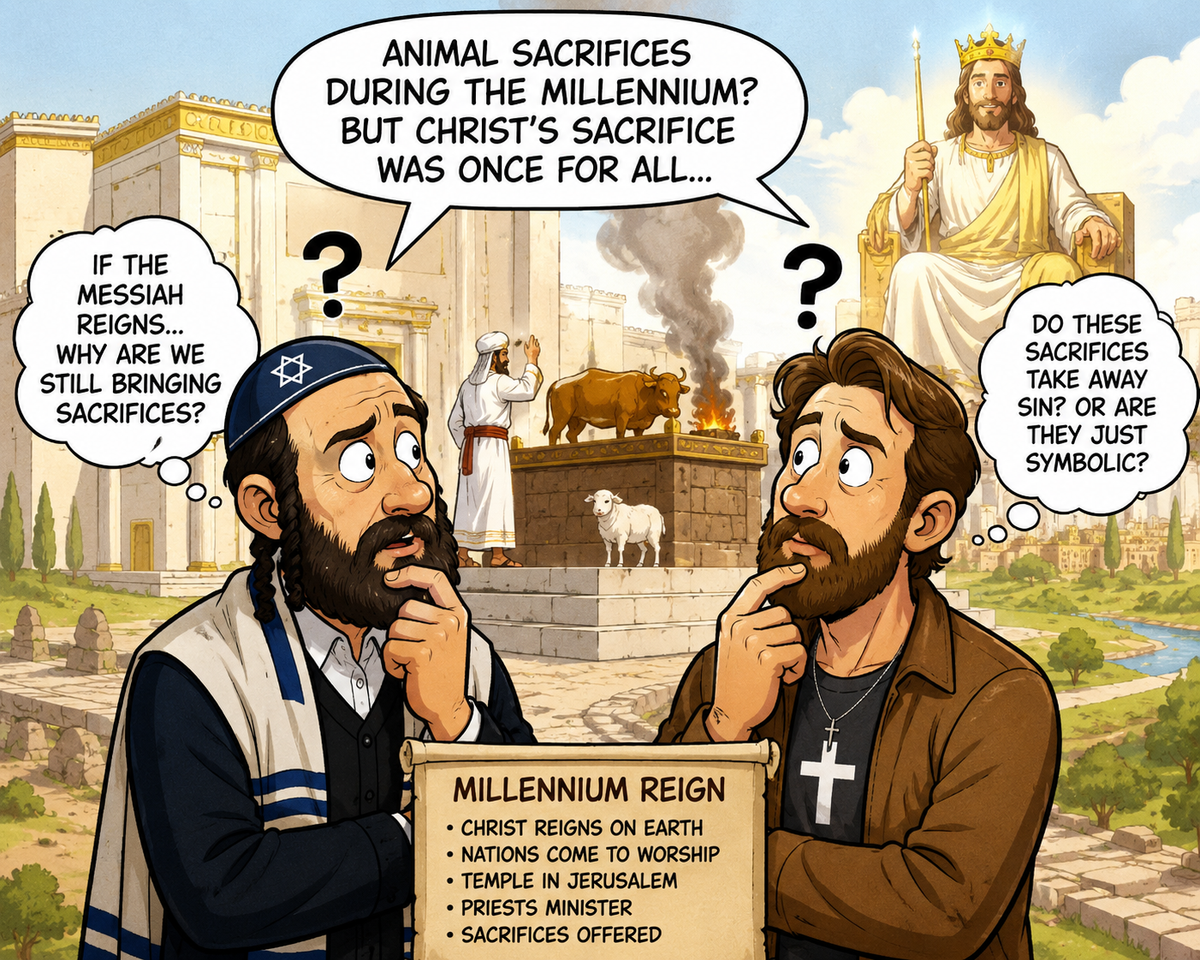
Come to find out, this is one of the most debated questions in biblical theology. The primary passage is Ezekiel, (Ezekiel 40–48, with chapters 43–46 containing the sacrificial instructions) which describes a future temple with priests, offerings, and sacrifices. Other passages, such as Zechariah and Isaiah, also describe worship during the Messianic Kingdom.
The question is: If the sacrifice of Jesus Christ was once for all, why would sacrifices return?
In my research I discovered there are four major views:
1. Memorial sacrifices (the most common premillennial view)
This is the view held by many dispensational scholars.(teach that God administers His relationship with humanity through distinct periods or "dispensations")
The sacrifices do not remove sin. They serve as memorials pointing back to Christ's completed work, much like the Lord's Supper remembers His death today.
The reasoning is:
- The New Testament clearly teaches Christ's sacrifice was once for all.
- Hebrews repeatedly states that animal blood can never take away sins.
- Therefore the Millennial sacrifices cannot compete with the cross.
Instead they become visible reminders for the nations living under Messiah's earthly reign.
Strength:
- Preserves the finality of Christ's atonement.
Difficulty:
- Ezekiel sometimes uses language associated with making atonement, which some believe is stronger than mere memorial language.
2. Ceremonial cleansing rather than eternal forgiveness
Another view pays close attention to the Hebrew word kaphar ("make atonement").
Throughout the Torah, sacrifices often purified sacred space from ritual impurity rather than providing eternal salvation.
For example:
- cleansing the altar
- purifying the sanctuary
- restoring ceremonial access
According to this interpretation, Ezekiel's sacrifices function similarly.
Just as the Leviticus system purified the earthly tabernacle, Millennial sacrifices maintain ritual purity in the earthly temple where the Messiah visibly reigns.
This distinguishes:
- judicial forgiveness through Christ
- ceremonial purification for temple worship
3. Symbolic vision
Many amillennial and some postmillennial interpreters believe Ezekiel is not describing a literal future temple.
Instead:
- the temple represents God's presence
- sacrifices symbolize worship
- measurements portray holiness and order
They point to passages such as Revelation, where there is ultimately no temple because God Himself dwells with His people.
4. The prophecy has not yet been fully understood
Some scholars simply admit that Ezekiel describes real sacrifices while Hebrews teaches the complete sufficiency of Christ, and they conclude that we may not yet understand exactly how those truths fit together.
My own reading of the biblical evidence
Taking Scripture at face value:
- Christ's sacrifice can never be repeated.
- Salvation is never again obtained through animal blood.
- Ezekiel appears to describe genuine offerings.
- Therefore those offerings must serve a different purpose than Calvary.
That purpose is likely connected with the administration of worship in a restored earthly kingdom.
Remember, the Millennium is unique.
- The Messiah reigns physically from Jerusalem.
- Mortal people continue to be born.
- Nations come annually to worship.
- A functioning priesthood exists.
- The Temple becomes the center of world worship.
This is not the eternal state; it is a transitional kingdom before the creation of the new heavens and new earth.
A thought worth considering
One reason God repeatedly established memorials throughout Scripture is because people forget.
Israel had:
- the Passover,
- the feasts,
- the Sabbath,
- stones of remembrance,
- fringes on garments,
- phylacteries,
- sacrifices.
Even after Christ, believers observe the Lord's Supper "in remembrance of Me."
During the Millennium there will still be mortal humans with sinful natures who need continual reminders of the cost of redemption. Animal sacrifices could serve as powerful visual memorials of the price of sin, while never replacing or adding to the finished work of Christ.
That interpretation fits well with the teaching of Hebrews: the blood of bulls and goats never saved anyone; they pointed to the Lamb of God. In the Millennium, if literal sacrifices occur, they would point back to the same completed sacrifice rather than forward to one yet to come.
Comments ()