

Hebrew Month of Tishrei
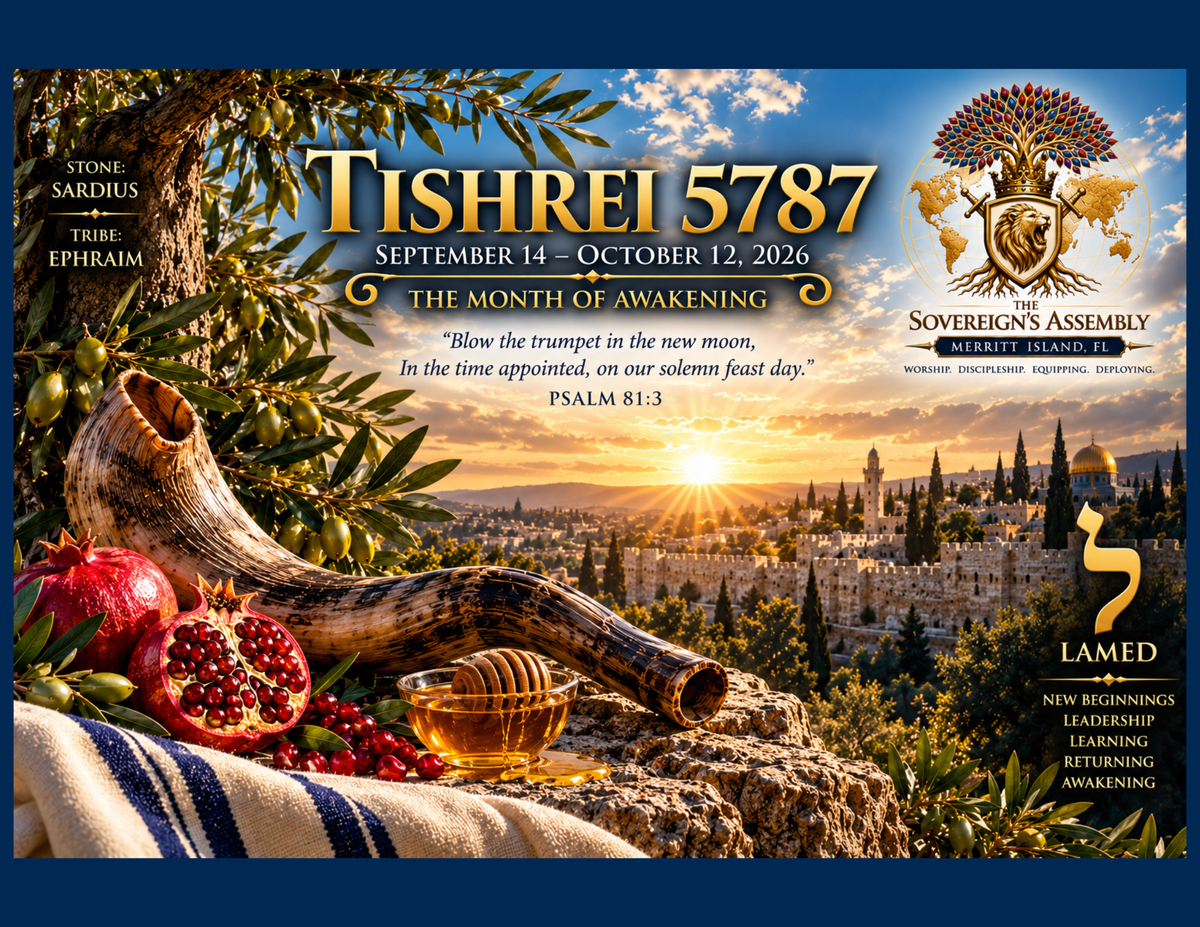
As we enter the Hebrew year of 5787, we do so from a place of unity, as Kings and Priests aligning with God’s prophetic call on our lives to speak His Word so that we might walk in spiritual authority as One New Humanity in Yeshua.
This year, 5787, is significant, as the Lord reminds us that His Word is a powerful sword in the spiritual realm and that when we speak according to His truth, there will be life, confirming Proverbs 18:21, “Death and life are in the power of the tongue.”
The Hebrew month of Tishrei is specifically focused on embracing the Kingship of God of the Universe.
Prophetic Quickview of Tishrei
Tishrei is the month of new beginnings, repentance, and renewal.
- Hebrew tribe associated with the month of Tishrei: Ephraim, Ephraim means to “be fruitful and multiply.”
- Hebrew letter associated with the month of Tishrei: Lamed, lamed signifies reaching for and directing your hopes and desires to return to the Lord.
This is the month to…
- Position your heart and mind on the Lord, seeing the new thing He is doing in your life
- Repent to the Lord, make amends with those around you
- Awaken and remove what has kept you from returning to the Lord
- Cover any iniquities with the blood of Yeshua
- Renew your covenant with the Lord
- Abide in the Lord’s presence
- Place your feet beneath the Father’s table, honoring the appointed time of Rosh Hashanah, Yom Kippur, and Sukkot (Fall Feasts)
- Bring an offering to the Lord and sow with expectation
Rosh Hashanah and Accepting God’s Kingship
In God’s Kingdom, there are two types of citizens.
- There are those who serve God the King from a place of fear.
- Those who serve from a place of love.
Those who serve Him from a place of fear do so because they are afraid of the consequences should they choose otherwise.
Those who serve the King from a place of love do so from a heart posture of intense love, where they desire to truly follow His instruction.
- “We love Him because He first loved us.” —1 John 4:19
- “If you love Me, keep My commandments.” —John 14:15
A servant, one who accepts God’s Kingship, does not feel forced or constrained but rather follows His instruction from a place of honor and understanding the privilege of being in His Kingdom.
The Takeaway for the Hebrew Month of Tishrei…
In the Hebrew month of Tishrei and during the feasts of Rosh Hashanah, Yom Kippur, and Sukkot, we focus on positioning our hearts to serve God and His Kingdom from a place of love and living free from fear-based obedience.
- “There is no fear in love; but perfect love casts out fear, because fear involves torment. But he who fears has not been made perfect in love.” —1 John 4:18
Rosh Hashanah, Yom Kippur, and Sukkot in the Month of Tishrei
This month celebrates all three of the Fall Feasts of the Lord, making it significant amongst the other seasons of the year. The period from Rosh Hashanah to Yom Kippur is called the High Holy Days, High Holidays, or Days of Awe. It is marked by an extended moment of sincere introspection.
Begin the month of Tishrei and the new year looking inward and from a heart posture of repentance. The Lord is not only bringing you into a new year, He is bringing you into a new level of agreement with His voice.
Tishrei is the doorway into a new season. It is the beginning of God’s appointed times, where Heaven calls us to stop striving, draw near, and allow the Lord to establish His purposes for the days ahead.
During the Hebrew month of Tishrei, pray such as this:
“Lord, reveal what is in my innermost parts that needs to be repented of, removed, or changed. Show me hidden sin I may not even be aware of. “Yeshua, show me people I need to repent to and seek forgiveness from.“Father, reveal places in my life I have charted off course and allow me to repent and return to You and into alignment with Your path for my life.”
At Rosh Hashanah or Feast of Trumpets, we celebrate the beginning of the new civil year. The trumpet blast awakens our souls to return to God so we can receive a fresh outpouring of His Spirit to move forward in the year ahead.
The days between Rosh Hashanah and Yom Kippur, the Days of Awe, culminate on Yom Kippur, the Day of Atonement. This is when we are cleansed and renewed through repentance as we remember that the Blood of the Lamb covers us.
At Sukkot, the Feast of Tabernacles, we celebrate God’s provision in the wilderness and renew our covenant from a place of joy. We abide in His presence and trust His covering.
Comments ()