

Part 4: The Biblical Qualifications for Elders, Overseers, and Deacons
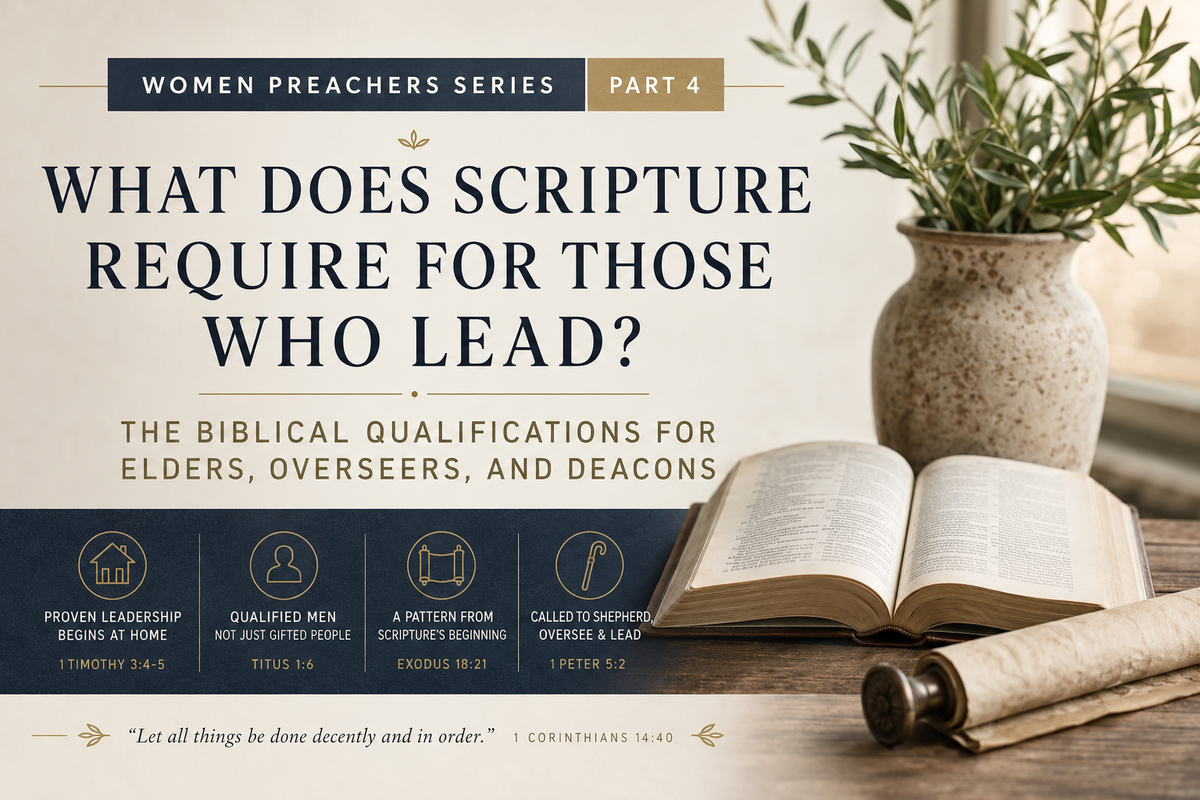
One of the most important principles in interpreting Scripture is allowing the Bible to define its own offices. Before asking who may serve as an elder, overseer, or deacon, we should first examine the qualifications God established for those positions.
The issue is not personal gifting, intelligence, education, passion, or even spiritual maturity alone. Scripture provides specific qualifications for those entrusted with governing and shepherding the assembly.
1. Elders and Overseers Must Meet God's Qualifications
Paul writes:
"A bishop then must be blameless, the husband of one wife..." (1 Timothy 3:2)
He continues:
"One who rules his own house well, having his children in submission with all reverence." (1 Timothy 3:4)
Paul then explains why:
"For if a man does not know how to rule his own house, how will he take care of the church of God?" (1 Timothy 3:5)
The qualification is not merely marital status. The elder's home becomes the proving ground for leadership within the assembly.
Notice the repeated emphasis:
- Husband
- Father
- Household leader
- One who governs his house well
Paul views leadership in the assembly as an extension of leadership already demonstrated within the home.
2. Titus Repeats the Same Pattern
Paul gives nearly identical instructions to Titus.
"If a man is blameless, the husband of one wife, having faithful children..." (Titus 1:6)
Again, the elder is described as:
- A man
- A husband
- A father
- One whose family demonstrates orderly leadership
This is not an isolated statement in one letter. It appears in multiple apostolic instructions concerning the appointment of elders.
3. The Pattern Begins Before the New Testament
The apostolic instructions did not emerge from nowhere.
When Moses established leadership in Israel, he appointed:
"Able men, such as fear God, men of truth..." (Exodus 18:21)
Likewise:
"Take wise and understanding men..." (Deuteronomy 1:13)
Throughout Israel's history, the elders sitting in the gates and governing the people were men entrusted with covenantal responsibility.
The New Testament does not create a new pattern. It continues the existing pattern.
4. What About Deacons?
The qualifications for deacons appear in 1 Timothy 3.
"Let deacons be the husbands of one wife, ruling their children and their own houses well." (1 Timothy 3:12)
Again, the same requirements appear:
- Husband of one wife
- Household leadership
- Children under proper care
The office is connected to proven covenant leadership within the home.
5. Leadership in Scripture Is More Than Teaching
One common mistake is reducing the discussion to preaching.
The office of elder involves:
- Shepherding
- Governing
- Correcting error
- Guarding doctrine
- Caring for the flock
- Exercising authority
Peter writes:
"Shepherd the flock of God which is among you, serving as overseers..." (1 Peter 5:2)
Paul tells the Ephesian elders:
"Take heed to yourselves and to all the flock, among which the Holy Spirit has made you overseers..." (Acts 20:28)
The question therefore becomes larger than who can deliver a message.
The biblical office concerns governance of the assembly.
6. Scripture Distinguishes Between Ministry and Governing Offices
The Bible records many women whom God used powerfully:
- Deborah
- Huldah
- Priscilla
- Phoebe
- Anna
These examples demonstrate that women can serve, teach, prophesy, disciple, encourage, counsel, and minister.
The question under consideration is narrower:
Did Scripture establish women as elders, overseers, or pastors responsible for governing the assembly?
When the qualifications for those offices are listed, the requirements consistently describe a qualified husband and father who has demonstrated leadership within his household.
Conclusion
The debate should not begin with modern culture, denominational traditions, or personal experiences.
It should begin where Scripture begins:
"What qualifications did God establish for those who shepherd His people?"
The consistent testimony of:
- Torah
- The historical pattern of Israel
- The teachings of Messiah
- The apostolic instructions
is that elders, overseers, and deacons are selected from qualified men who have already demonstrated faithful covenant leadership within their homes.
The issue is not value, intelligence, gifting, or spiritual worth. Scripture teaches that men and women are equally created in God's image and equally heirs of salvation. The question is one of biblical order and covenant responsibility within the assembly. (Genesis 1:27; Galatians 3:28; 1 Peter 3:7)
Comments ()