

Can A Woman be A Pastor or Preacher?
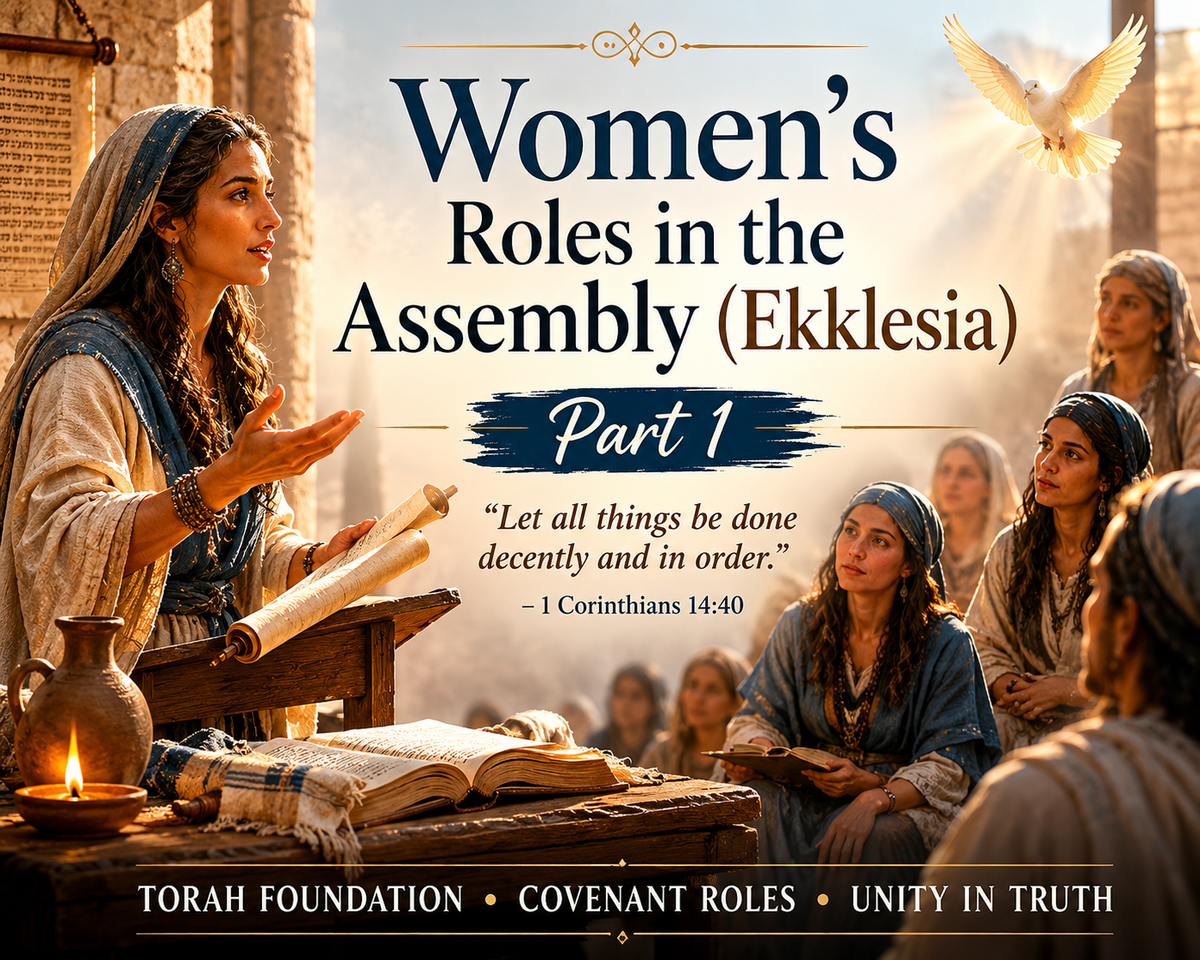
The debate over women's preaching and ordination has been a primary catalyst for the creation of several new religious denominations throughout history.
This week the topic of women teaching from the pulpit was introduced as a topic that was found troubling. Researching history will reveal that different denominations form when groups disagree on biblical interpretation regarding whether women are permitted to hold positions of spiritual authority. Based on our foundation, it becomes evident that the formation of separate factions over disagreements in biblical interpretation is contrary to God's design for His people. Division rooted in doctrinal disputes often reveals the influence of pride, strife, and self-interest rather than the unity and mutual submission that Scripture calls us to pursue.
Understand this: The Bible will interpret itself. And, as disciples of Holy Spirit (Jesus) (John 14; John 16; 1 John 2) our pursuit and goal as disciples is to imitate Him from how He patterned His days, How He prayer, How He interpreted the scriptures, etc... So let's discover what our scriptures instruct us regarding women's roles in the assembly of saints.
— John 14:26 (NKJV)
Believers have reached different conclusions on this question because several passages must be considered together.
The primary texts often discussed are:
- 1 Timothy 2:12 — “I do not permit a woman to teach or to have authority over a man, but to be in silence.”
- 1 Corinthians 14:34–35 — “Let your women keep silent in the churches...”
- Acts 2:17–18 — “Your sons and your daughters shall prophesy...”
- Acts 18:26 — Priscilla and Aquila explained the way of God more accurately to Apollos.
- Romans 16:1–2 — Phoebe is commended as a servant (diakonos) of the assembly.
- Romans 16:7 — Junia is mentioned among the apostles (the exact meaning of this phrase is debated).
- Judges 4–5 — Deborah served as a judge and leader in Israel.
- John 4:28–30, 39–42 — The Samaritan woman became a witness who brought many to Messiah.
From the Torah alone, several observations emerge:
1. There is no explicit Torah command forbidding women from speaking before the assembly.
No command in Genesis through Deuteronomy says:
- A woman shall not teach.
- A woman shall not prophesy.
- A woman shall not address Israel.
- A woman shall not declare the word of YHWH.
If such a prohibition were central to covenant life, we would expect to find it in the Torah itself.
2. The Torah recognizes women as recipients of covenant revelation.
At Sinai, the covenant was given to all Israel.
"Gather the people together, men and women and little ones..." (Deuteronomy 31:12)
The Torah portrays women as covenant participants, not merely observers.
3. The Torah records women functioning as prophetic voices.
Before entering the land, Miriam is explicitly called a prophetess.
Miriam the prophetess, the sister of Aaron... (Exodus 15:20)
After the crossing of the sea, she leads Israel in worship and proclamation.
A key question for the thesis:
If YHWH publicly recognizes Miriam as a prophetess, by what Torah principle would prophetic speech be forbidden?
4. The Torah establishes male headship in family structure.
This is also undeniable.
- Adam is created first.
- Family inheritance generally flows through fathers.
- Tribal leadership is overwhelmingly male.
- Elders at the gates are male.
A Torah thesis must account for both realities:
- Women speak prophetically.
- Men generally occupy covenant headship roles.
The tension is not whether women can speak; it is how authority is structured.
5. The Torah distinguishes between prophecy and governance.
Miriam was a prophetess.
Aaron was High Priest.
Moses was covenant mediator.
These roles were not identical.
This distinction may become important when later discussions arise regarding elders, overseers, and shepherds.
6. The strongest Torah-era example is Deborah.
Though found in the Prophets rather than the Torah itself, Deborah stands within Israel's covenant framework.
She was:
- A prophetess.
- A judge.
- One to whom Israel came for decisions.
Her existence proves that any universal claim such as "God never allows women to lead Israel publicly" cannot be sustained from Scripture.
Theological opponents may argue Deborah was an exception.
But an exception still demonstrates possibility.
YHWH appointed her.
Our Torah-based conclusion we see:
- Torah does not forbid women from speaking God's word.
- Torah explicitly recognizes female prophetic ministry.
- Torah generally establishes male covenant headship.
- Torah does not equate prophetic ministry with governmental office.
- Therefore, the question now becomes whether she is exercising the governing authority of an elder, overseer, or shepherd of the assembly. So the real issue is often not, "Can a woman speak the word of God?" Scripture clearly shows women doing that.
The debate is whether Scripture permits women to hold the authoritative teaching and governing office over the assembled congregation.
Stay tuned for Part 2
Comments ()